Product
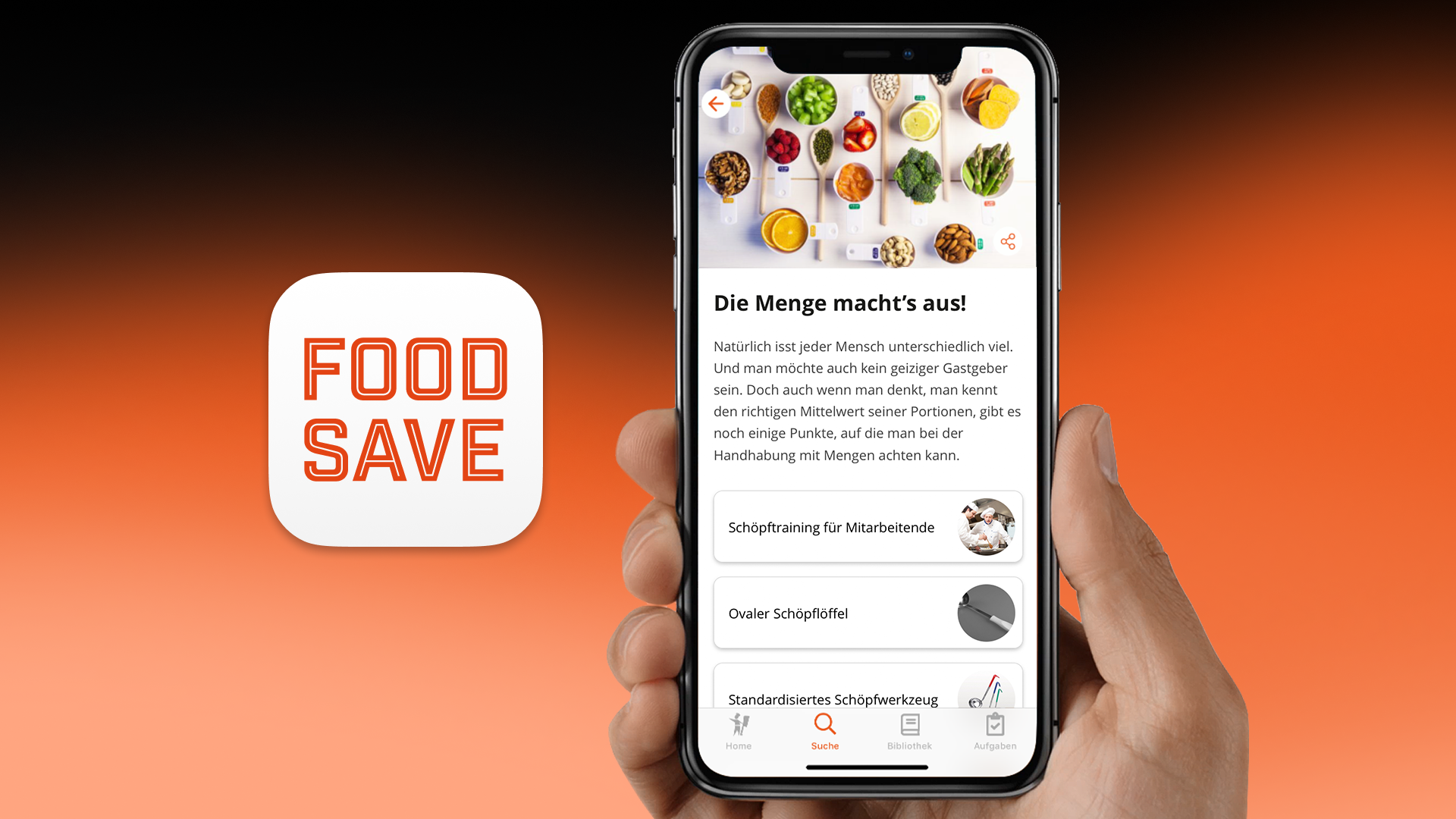
The Food Save app is a mobile tool designed to help professional kitchens reduce food waste with concrete, ready-to-use measures. Instead of abstract sustainability advice, it gives head chefs and kitchen managers a curated library of actions they can implement step by step. The focus is on practicality: busy teams quickly find measures that fit their context and integrate them into daily work.
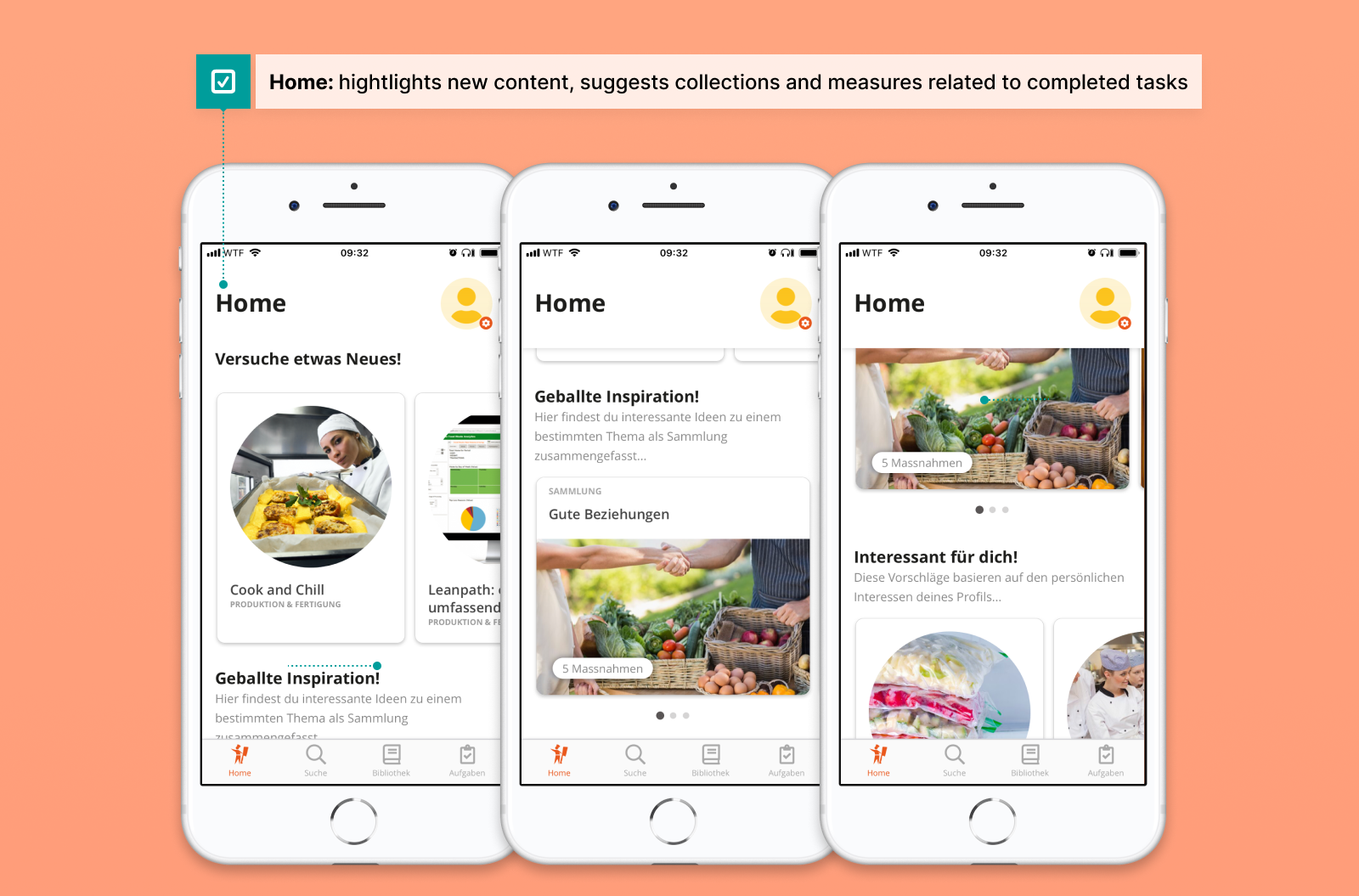
The Home Screen was designed to inspire users.
Company
The app was developed at Foodways, a Swiss company focused on food sustainability, in collaboration with the “United Against Waste” foundation. Foodways works with industry and individual businesses to reduce food waste, and the app extended this work into a simple, accessible tool for gastronomy companies.
Role
I was the sole UX/UI designer from 2018 to 2019. I defined user flows, designed the interface, and prepared handoffs for development. I reported to Moritz and Mark (Swiss Foodways team → United Against Waste) and collaborated with PM João Almeida in Lisbon.
Problem & context
Food waste is an environmental, ethical, and economic problem—wasted resources, time, and money. United Against Waste works with companies to fight it, and Foodways was commissioned to create a mobile tool that brings actionable measures directly to professional kitchens.
Kitchen managers knew they should reduce waste, but didn’t know how to do it practically. Busy schedules made environmental motivation insufficient—they needed concrete, implementable ideas for their fast-paced reality.
Constraints: Fixed UAW visual identity, external dev team across time zones, tight pre-approved budget. Designs had to be focused and realistic to build.
Research & insights
The primary users we designed for were head chefs and kitchen managers. They decided which measures to adopt and communicated them to their teams. The goal was not to put another app in everyone’s hands in the kitchen, but to support decision-makers with clear, usable guidance they could translate into procedures.
In interviews and informal conversations, a few patterns stood out:
● Many managers felt they were “probably wasting more than they should” but didn’t have a clear overview or plan;
● They were not interested in social features or competition; they cared about simple measures they could realistically introduce;
● Any solution had to be fast to consult and easy to revisit; they didn’t have the time or mental space for complex interfaces.
● Many managers felt they were “probably wasting more than they should” but didn’t have a clear overview or plan;
● They were not interested in social features or competition; they cared about simple measures they could realistically introduce;
● Any solution had to be fast to consult and easy to revisit; they didn’t have the time or mental space for complex interfaces.
These conclusions reinforced the need for the app to focus on clarity and action, rather than gamified competition or social ranking.
Strategy and concept shift
Early on, the idea was to create a competition between kitchens, where teams would implement measures and publicly share their results. On paper, this sounded engaging. In practice, feedback from kitchen managers suggested the opposite: they did not see themselves using a competitive app or spending time publishing results. They wanted knowledge and concrete suggestions, not the social layer.
Given our limited budget, investing in social and competitive features would have meant less time and money for the core experience. I shared these insights with the Swiss team, and together we shifted the concept from a “food challenge” app to a Food Save app focused on:
• Providing a library of concrete waste-reducing measures;
• Helping managers choose measures that fit their reality;
• Supporting implementation with a simple, focused workflow.
• Helping managers choose measures that fit their reality;
• Supporting implementation with a simple, focused workflow.
This shift allowed us to keep the app simple and practical while spending limited resources where they mattered most.
Design execution
Measure library
The Swiss team provided the content: a structured set of measures and categories grounded in their expertise and the Food Save methodology. My role was to design how this information would work on a phone and be navigated in a busy work context.
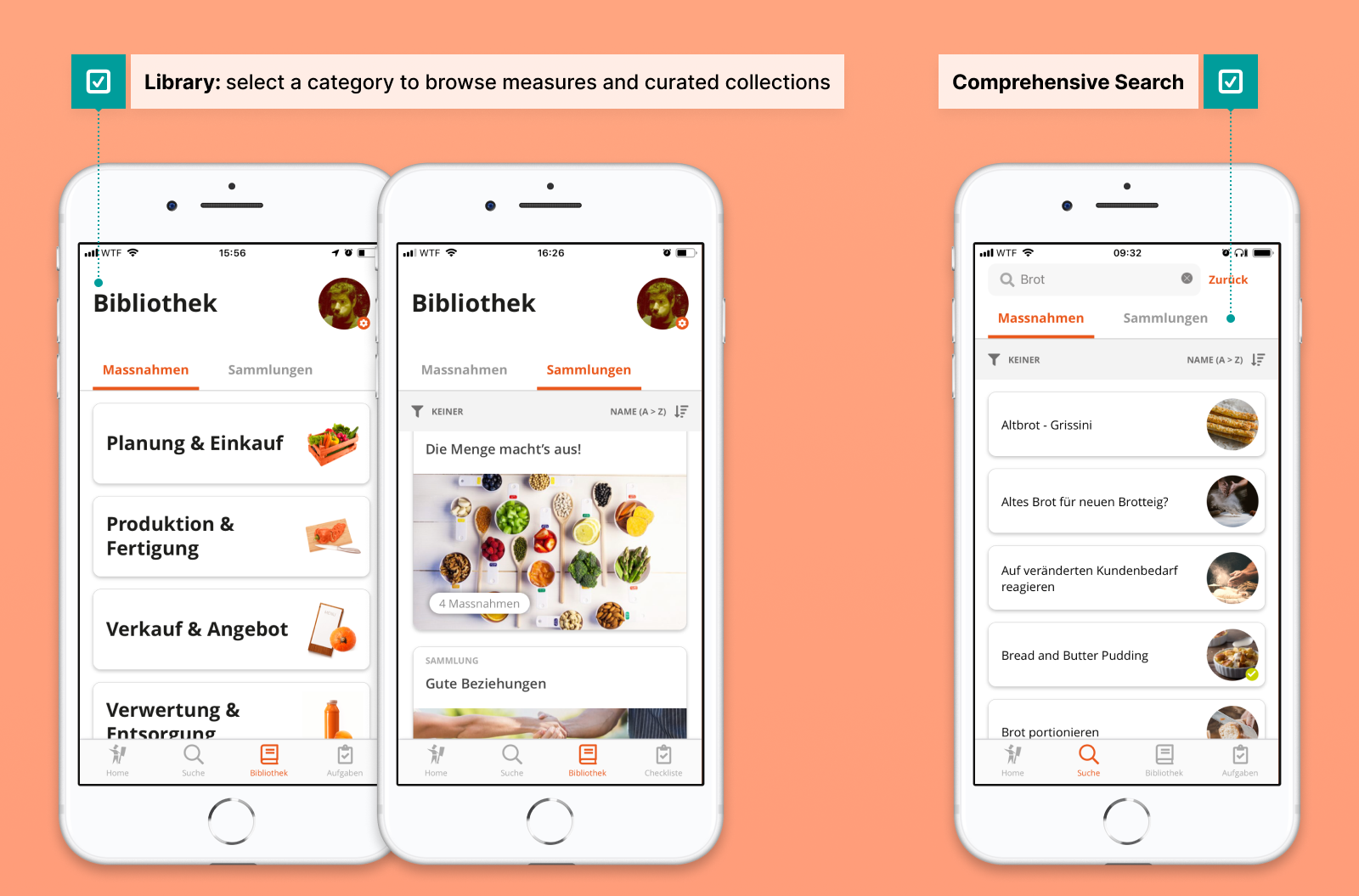
Curated library of waste-reducing measures, organized for busy head chefs and managers.
I created a measure library that followed familiar mobile patterns so it would feel natural on both iOS and Android from a single shared build. Users could browse by category and quickly see which measures might be relevant to their kitchen type. Each measure was presented in a compact, scannable way, focusing on what to do, how to do it, and, where relevant, extra details such as examples or recipe ideas to use up specific ingredients.
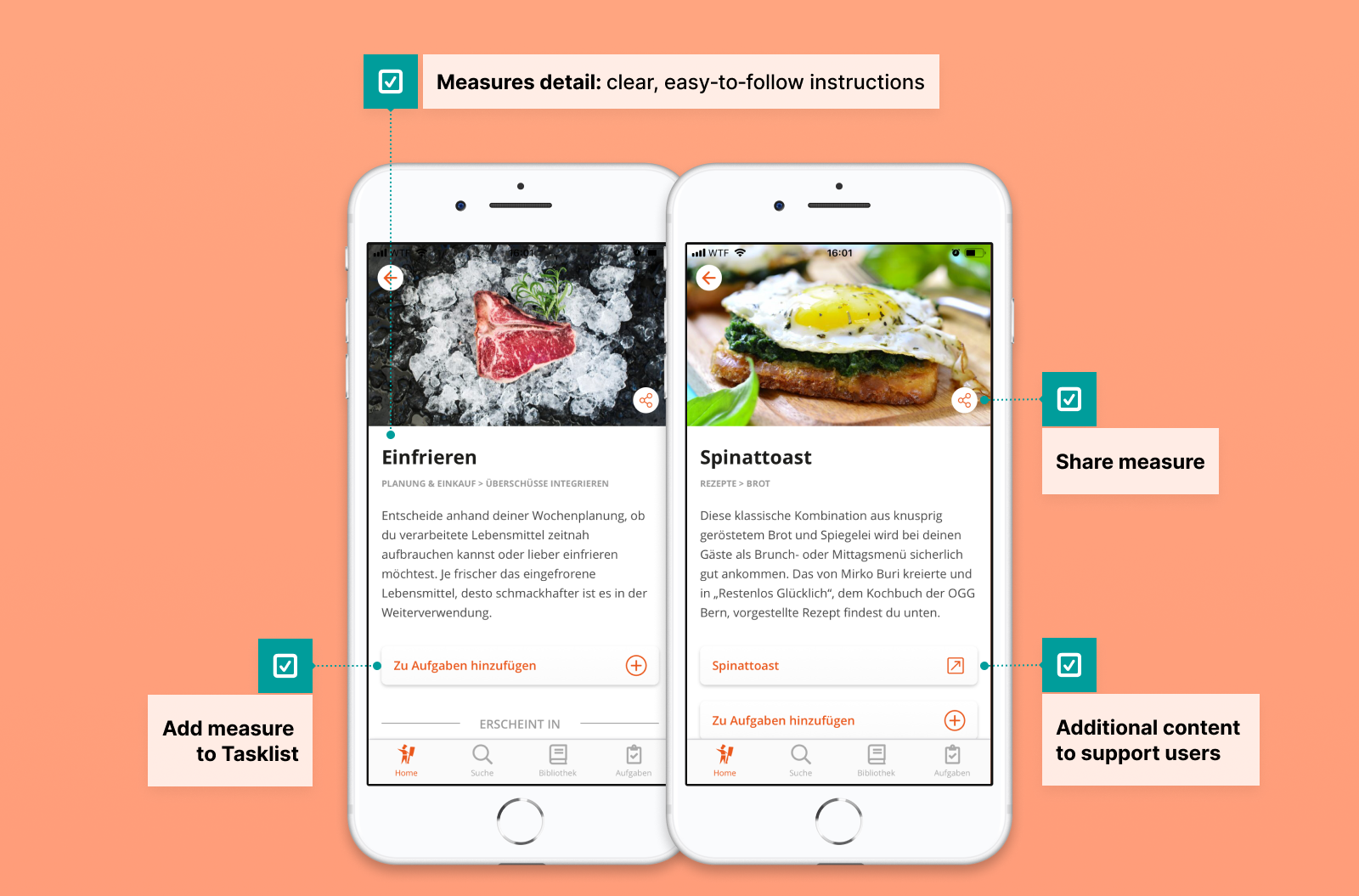
Each measure focuses on what to do, how to do it, and concrete examples.
To-do list for implementation
Once we dropped the competition and social features, we had some development budget left. I proposed using it to support implementation directly with a checklist.
Instead of just reading measures and hoping to remember them, kitchen managers could:
● Select measures they wanted to implement;
● Store them in a simple to-do list inside the app;
● Mark them as completed once they have been introduced in the kitchen.
● Select measures they wanted to implement;
● Store them in a simple to-do list inside the app;
● Mark them as completed once they have been introduced in the kitchen.
This small addition turned the app from a static library into a light planning tool. It fit the way managers work: they could collect ideas, prioritize them, and return when they had time to act.
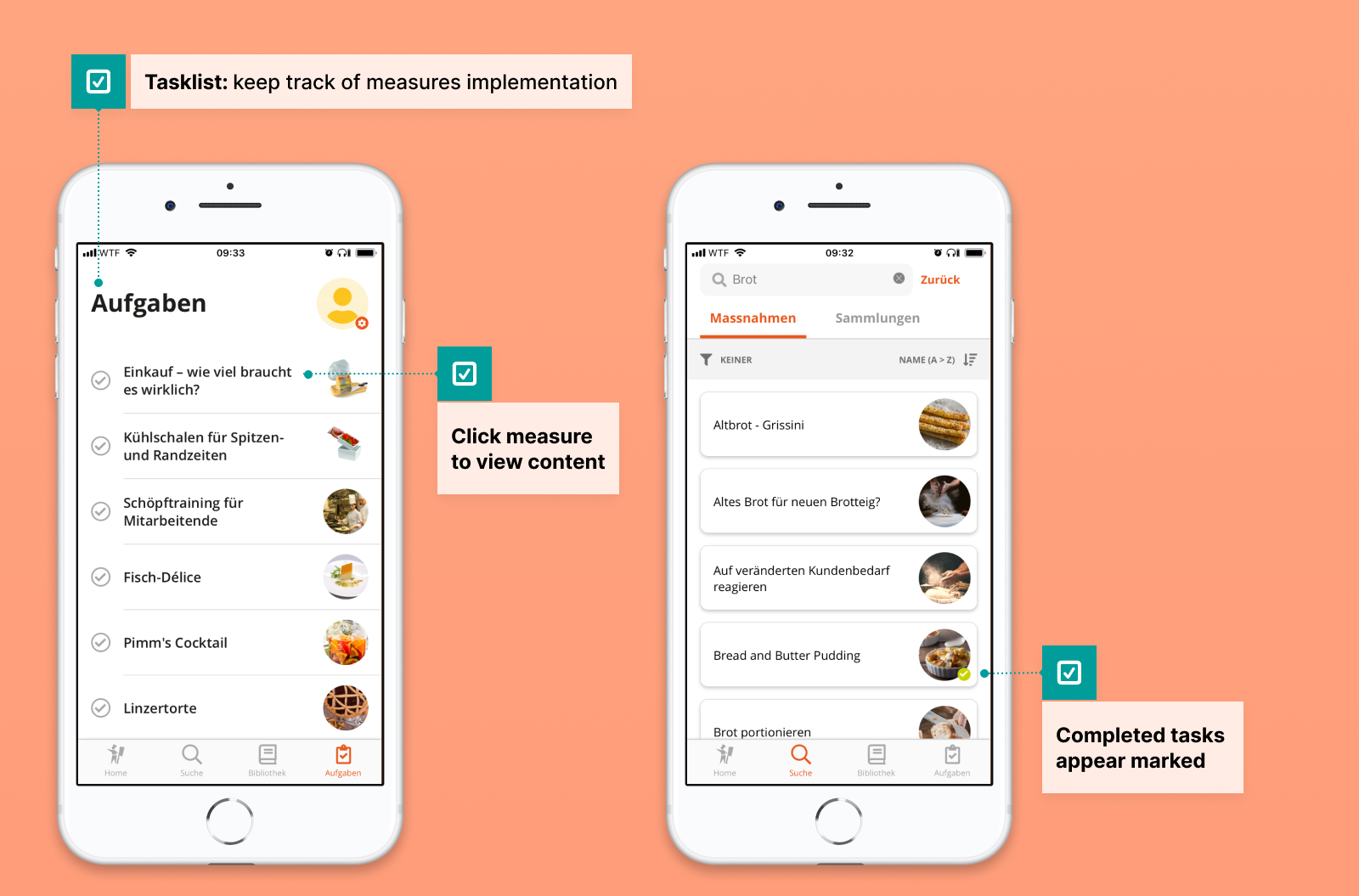
Decision-makers select measures they want to implement in their own kitchens.
Branding and UI
I followed United Against Waste’s branding, as defined in the primary color, the presence of their logo, and the image style. Beyond that, the app’s visual system, including logo, layout, and detailed screen designs, was created by me, balancing consistency with clarity and readability across both platforms.
Collaboration & delivery
I collaborated asynchronously with the Swiss team (Moritz/Mark → UAW) and João (Lisbon PM). During João’s paternity leave, I took on PM responsibilities: sourced dev quotes, selected the MyFoodways dev team, and controlled budget/scope. I used annotated Sketch files and written specs for handoff. Dropping social features kept us under budget.
Impact & reflections
App launched but it’s no longer available. Users appreciated its simplicity and actionable content, offering managers concrete steps rather than vague goals.
UX Design learnings
● User research reshapes concepts: Kitchen managers rejected competition, leading to a more practical product;
● Simple features have impact: The checklist turned a library into an actionable planning tool;
● Budget constraints improve focus: Limited resources forced prioritization of what really mattered to users;
● Cross-role flexibility: Balancing design + temporary PM responsibilities strengthened project ownership.
● Simple features have impact: The checklist turned a library into an actionable planning tool;
● Budget constraints improve focus: Limited resources forced prioritization of what really mattered to users;
● Cross-role flexibility: Balancing design + temporary PM responsibilities strengthened project ownership.